

Rosalind Creasy’s 100-Square-Foot Garden
While doing research for my new book Edible Landscaping, I became so aware of how much energy is squandered on lawns. What if, I thought, a small area of people’s lawns were converted to growing edibles? When I checked stats for fruit and vegetable yields, I realized that all the information online is for commercial growers, not home gardeners. Home gardeners harvest more often and don’t discard misshapen vegetables. So I decided to dedicate a 5 by 20 foot area to growing edibles and measure how much I produce in 100 square feet. I put the garden in an area that adjoined my small lawn. It wasn’t a perfect spot; a third of the bed is shaded by a cedar tree, but the rest of the garden gets about 8 hours of sun.The Garden – Spring/Summer 2008
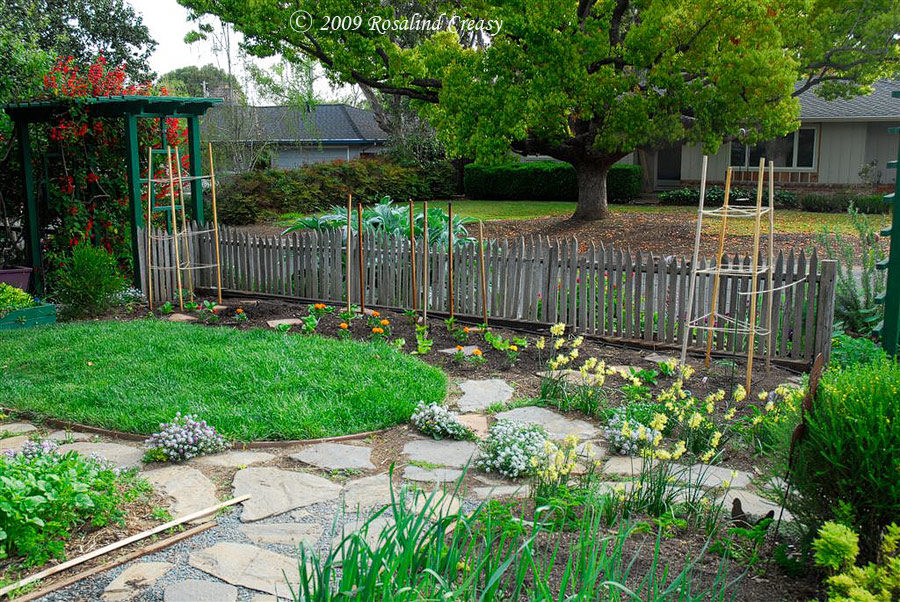
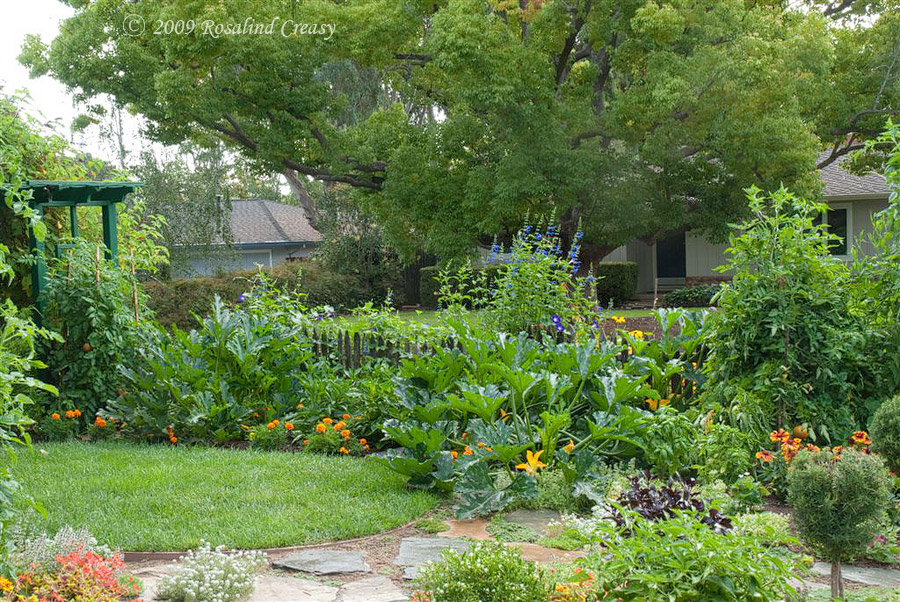 I kept it simple, choosing vegetables that I could buy as transplants at my local nursery; those that in my experience are either super productive or the vegetables themselves are expensive to buy:
- 2 tomato plants (‘Better Boy’ and ‘Early Girl)
- 6 bell peppers (2 ‘California Wonder’, 2 ‘Golden Bell’, 1 ‘Orange Bell’, and 1 ‘Big Red Beauty’)
- 4 zucchini (2 green ‘Raven’ and 2 ‘Golden Dawn’) – started from seeds
- 4 sweet basils
- 18 lettuce plants (6 ‘Crisp Mint’ romaine, 6 ‘Winter Density’ romaine, and 6 ‘Sylvestra’ butterhead) – interplanted among the tomatoes and peppers
- Tomatoes 77.5 pounds
- Ripe bell peppers 15.5 pounds
- Lettuce 14.3 pounds
- Basil 2.5 pounds
- Zucchini 126 pounds
The Global Possibilities
So, what if other people did what I did—how could this effect the economy? So I started crunching numbers. According to the Garden Writers Association’s 2009 surveys, 84 million U.S. households garden. If only half of them—42 million—took out a 5-by-20 foot area of lawn and grew a 100-square-foot garden, that would take 96,419 acres (150 square miles) out of lawn cultivation (think of the resources saved!). Granted, I’m an experienced gardener with great soil, so if those gardeners got half the yield I did, the savings on fresh produce would be: $14.4 billion!!! The Garden – Fall/Winter/Sping 2008-2009
This winter season, I grew:
The Garden – Fall/Winter/Sping 2008-2009
This winter season, I grew:
- Bok choi ‘Pak Choy Chinese’ 2.3 pounds
- Broccoli ‘Green Comet’ 2.6 pounds
- Chard ‘Rainbow’ 3.6 pounds
- Kale ‘Winterbor’ 1.3 pounds
- Lettuce ‘Speckled Trout’ 4.1 pounds
- Lettuce ‘Summer Bibb’ 1.5 pounds
- Mesclun ‘Tangy Cook Mix’ 2.8 pounds
- Pea ‘Sugar Snap Pole’ n/a
- Snow Pea ‘Oregon Giant’ n/a
- Radish ‘Easter Egg’ 2.6 pounds (63 radishes)
- Scallion ‘White Lisbon’ n/a
The Garden – Fall/Winter/Spring 2008-2009
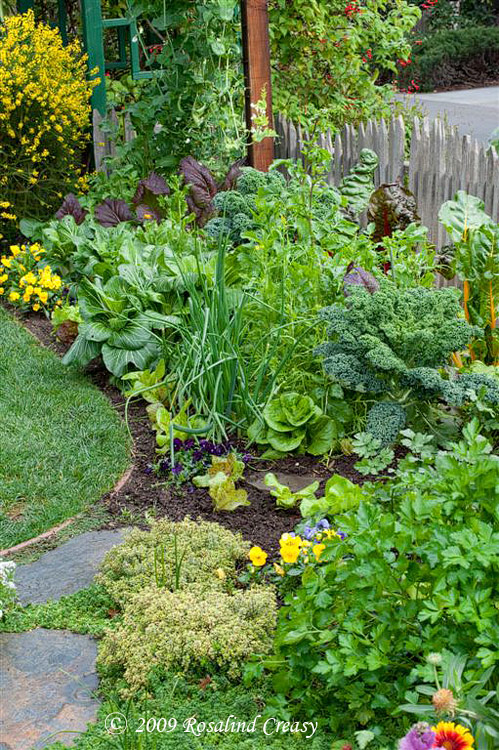 In fall and winter, growing slows, as is obvious by the harvest amounts. I had a germination problem with the peas; birds got those that did germinate. The lesson: Put bird netting down when you plant seeds. I also must confess that I was not as vigilant with my record keeping. The scallions grew past scallion stage into small onions. They were delicious, but alas they didn’t get weighed.
The Garden – Spring/Summer 2009
My plants and yields were:- Beans ‘Spanish Musica’ 22.3 pounds
- Chard ‘Rainbow’ 10.4 pounds
- Collards ‘Vates’ 11.4 pounds
- Pepper ‘Blushing Beauty’ 3.5 pounds
- Tomato ‘Celebrity’ 38.7 pounds
- Tomato’ Early Girl’ 83.1 pounds
- Zucchini ‘Raven’ 39.7 pounds
 I grew the beans on a bamboo teepee. The chard was left over from the previous season; I had cut it down to the ground and it regrew beautifully. The collards were so gorgeous; I didn’t harvest much from them. They grew vigorously, unfortunately overshadowing the pepper plant. The collards are this fall’s focal points. It’s obvious from the harvest amounts that the ‘Celebrity’ tomato was the one that was on the north end of the garden, and suffered from lack of sunlight. Even so, I had a bountiful year.
The Future is in Your Hands—and Soil
I'm going to plant one more summer trial garden in April before my redo of Edible Landscaping comes out in the fall and I'm too busy travelling to benefit from another garden like this. So, then I’ll be passing on the 100-Square-Foot Garden to all of you. Spread the word—tear up a bit of lawn and grow some fantastic food!! Let me know what you grow and what your yields are. Happy Growing and Bon Appétit!! Below is a link to a spreadsheet where you can track your own garden's results.Where to Get Your Seeds
Some of my favorite sources for garden seeds include Renee's Garden Seeds, Burpee's, Nichols Garden Nursery, Seeds of Change, and Johnny's Selected Seeds.
Downloads
Trial Garden Spreadsheet: Trial Garden Spreadsheet And some samples below from my 2008-2009 garden-- Excel sheets - BEANS : Excel sheets for Ros website BEANS Spanish Musica
- Excel sheets - ZUCCHINI: Excel sheets for Ros website ZUCCHINI Raven
by Rosalind Creasy
8 comments